The Oran marks 50 years
April 21, 2026
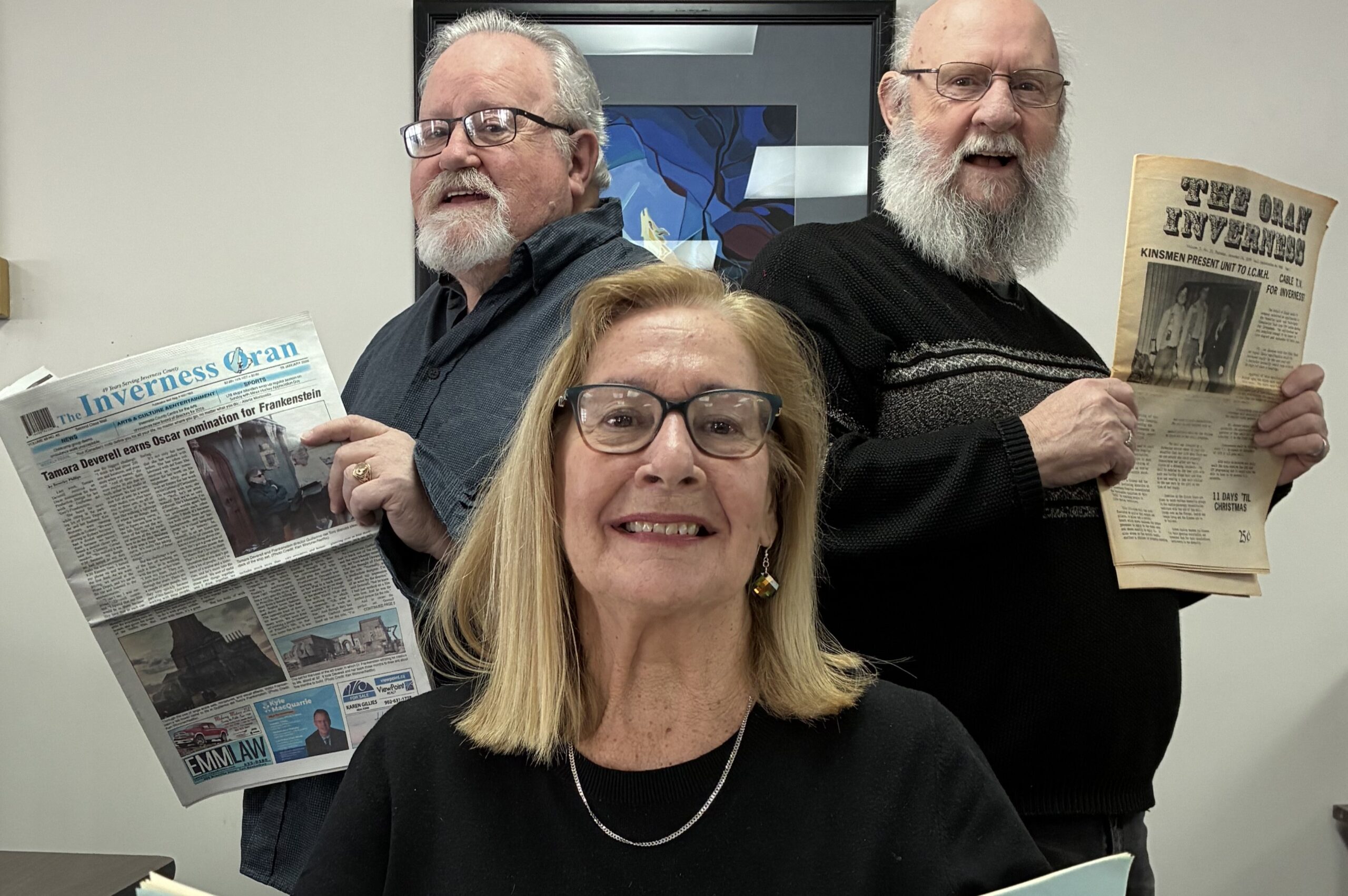
“We do the stories that matter to the county. We don’t ignore any stories, and we’ve still got that philosophy.”
Rankin MacDonald, editor of The Inverness Oran, says that’s been the key to the newspaper’s success as it celebrates 50 years this month.
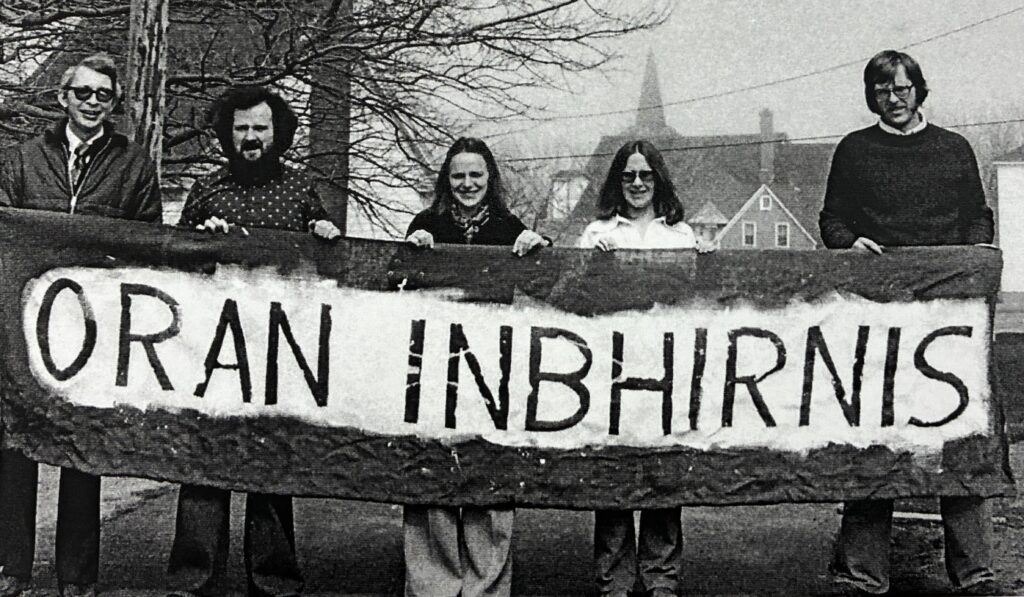
The Oran published its first edition on April 9, 1976, but the wheels were set in motion for its creation the previous summer, Rankin says.
“It was 1975 and it was one of those summers when all my friends seemed to come home together,” he recalls. He and his wife, Eleanor Macdonald, had been working in Calgary, but returned home to Inverness that summer, where they rekindled their friendship with Lawrence and Jackie Ryan, who had also left Inverness for work.
The two couples toured Europe that fall and landed back in Inverness in December of that year.
“I went on pogey [unemployment insurance], the first time I ever went on pogey, and we started a library, and we started a clothing bank in the old post office—the parish owned it at the time,” Rankin remembers, noting that Fr. Bob Neville, the local parish priest at the time, had joined them in their projects.
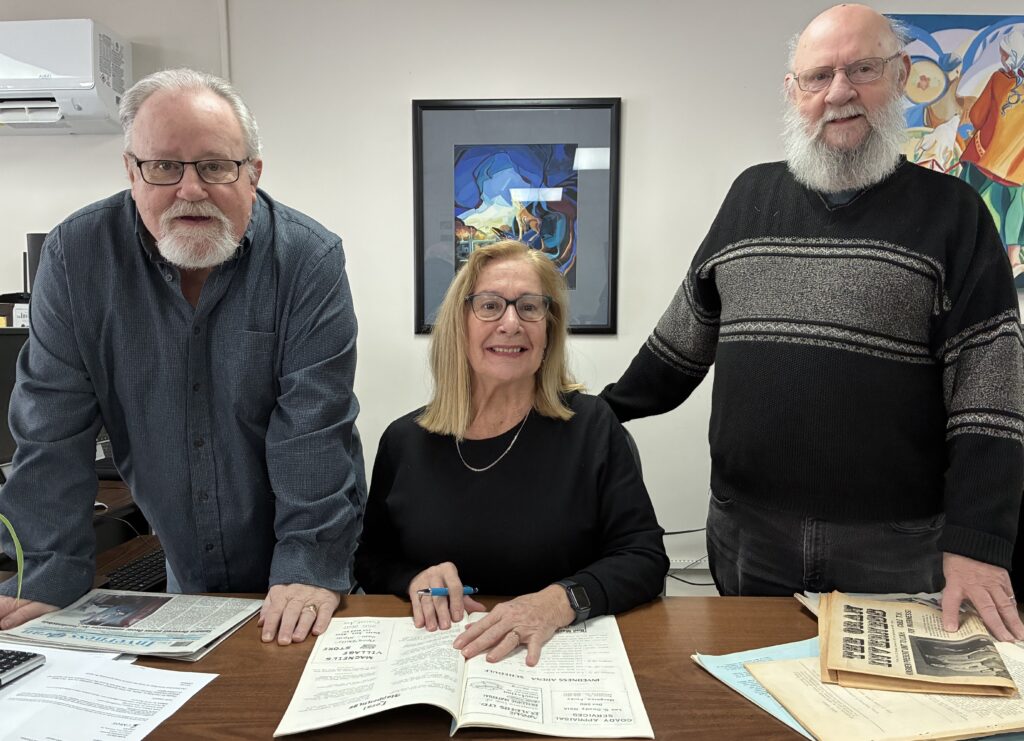
Macdonald have steered the Inverness Oran through five
decades of publishing the stories of Inverness County.
(Photo: Dave MacNeil)
“There was just not enough to do,” he says. “We were trying to figure it out. One day the five of us were sitting around and I looked down and there was a Halifax Herald there, and I just said, ‘why don’t we start a newspaper?”
“I was half joking, and everybody looked at me and said, ‘yeah, why don’t we start a newspaper?’”
So, the parish gave them an old Gestetner copier and free use of the central floor of the post office, and The Inverness Oran (Oran Inbhir Nis) was born. Known locally as the “Blue Book” because of its blue cover, The Oran was printed on legal size paper and stapled by hand. It was essentially a volunteer project, with more than a dozen contributors working to get it out each week.
“It was a wonderful experience,” Rankin says. “It started in Inverness and before long people were calling from neighbouring communities looking for coverage of their events.”
Eleanor says the group wanted to do something for the county but never thought it would turn into something they could make a living at.
“It was the response of the town that was the real eye-opener for us,” she says. “Everybody loved it. People would volunteer to staple the paper and help distribute it around town. Then the other communities were interested and that’s when we realized we had something that was needed.”
A few months into the project, Fr. Neville was reassigned to Port Hawkesbury, and the Ryans left for other opportunities. Frank Macdonald, meanwhile, had just returned from Calgary, where he was teaching part-time and working in construction.
“That fall of 1976, my father was diagnosed with leukemia,” Frank says. “Both of my sisters were married with families, so the only thing for me to do was to come back home and care for him.”
Rankin remembers Frank popping into the newspaper one day, asking if he could write a weekly column.
“I said ‘sure,’ and he started this column and it was great,” Rankin says. “It was such a different look at things.”
“He kept writing the column, but I couldn’t pay him. We were just scraping by. I said to him, ‘do you want to be part of it?’ He said, ‘yes’, so we said the three of us will own it. We’ll build it.”
The “Blue Book” gave way to a newspaper printed on newsprint when the Halloween 1978 edition rolled off the presses at the Scotia Sun in Port Hawkesbury.
The post office was torn down and the newspaper operated out of the laundry room at the old St. Mary’s Hospital in Inverness for a couple of years, before they got some space at the old Credit Union. Rankin says those early years were lean, but that the interest and support of local communities kept them going.
“Eventually, the money started to come, and we expanded through the county, and we were able to make a living,” he says. “Frank and I and Eleanor were making $150 a week. It was enough to get by in those days.”
Frank recalls those early days on The Oran payroll, noting the three new owners had a very basic decision to make.
“Do we close down the paper and go back to Calgary, where we had all fled from, or try to turn it into a business?” he says. “So, we did and began working on it as much as possible. In the first couple of years paydays were sparse and sometimes you got paid in coins.”
As the newspaper caught on in other parts of the county, Frank had another decision to make.
“I didn’t have a car,” he says. “I was 31 years old and I’d never had a driver’s license. I was just hitch-hiking around.”
“Rankin and I were the face of it because we were out and around doing stories, but Eleanor was the person holding it all together, I believe.”
Eleanor assumed the position of publisher, a title she holds to this day. She says she never thought back then that they’d last this long.
“We believed in it,” she says. “That was the biggest thing. And the people believed in it. So, we just kept going.”
“Once we went and got printed at the Scotia Sun, then it was a whole new ballgame. Once we saw a newspaper in print, then we knew we had something.”
The Oran was eventually invited to join the Atlantic Community Newspaper Association (ACNA), where they met publishers of other community newspapers who were key to the newspaper’s success. They included Bruce Murray, owner of Advocate Publishing in Pictou, Jim McNeill, who owned the Eastern Graphic in PEI, and Dave Cadogan, publisher of the Miramichi Leader.
“They would give us old equipment when they’d get new stuff,” Eleanor recalls. “They were very supportive of us.”
Frank remembers chatting with Cadogan at an ACNA conference, where the veteran newsman offered his opinion of The Oran’s success.
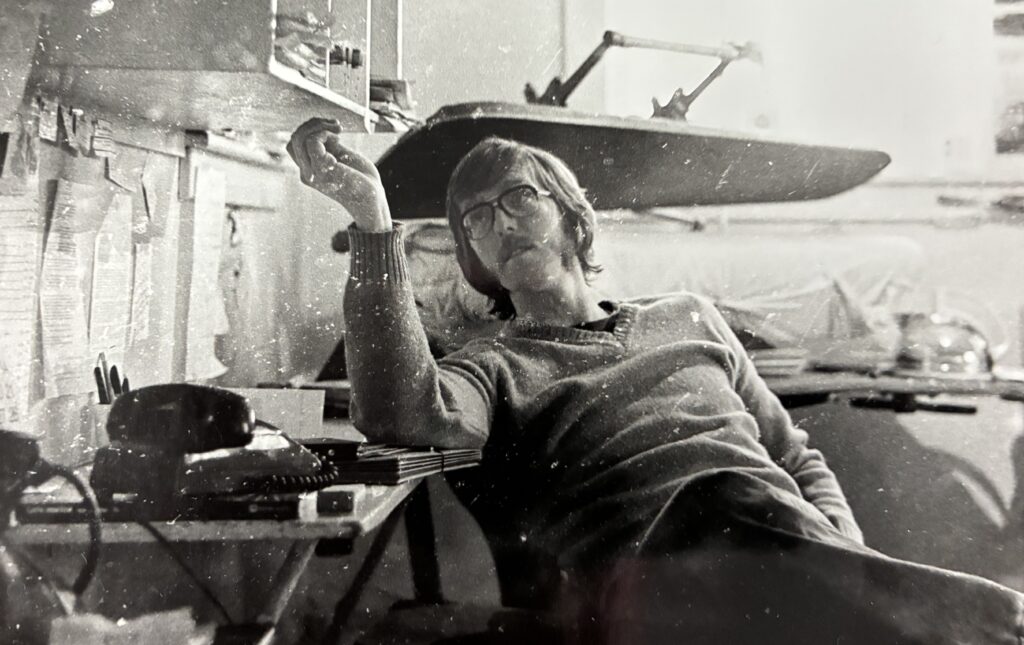
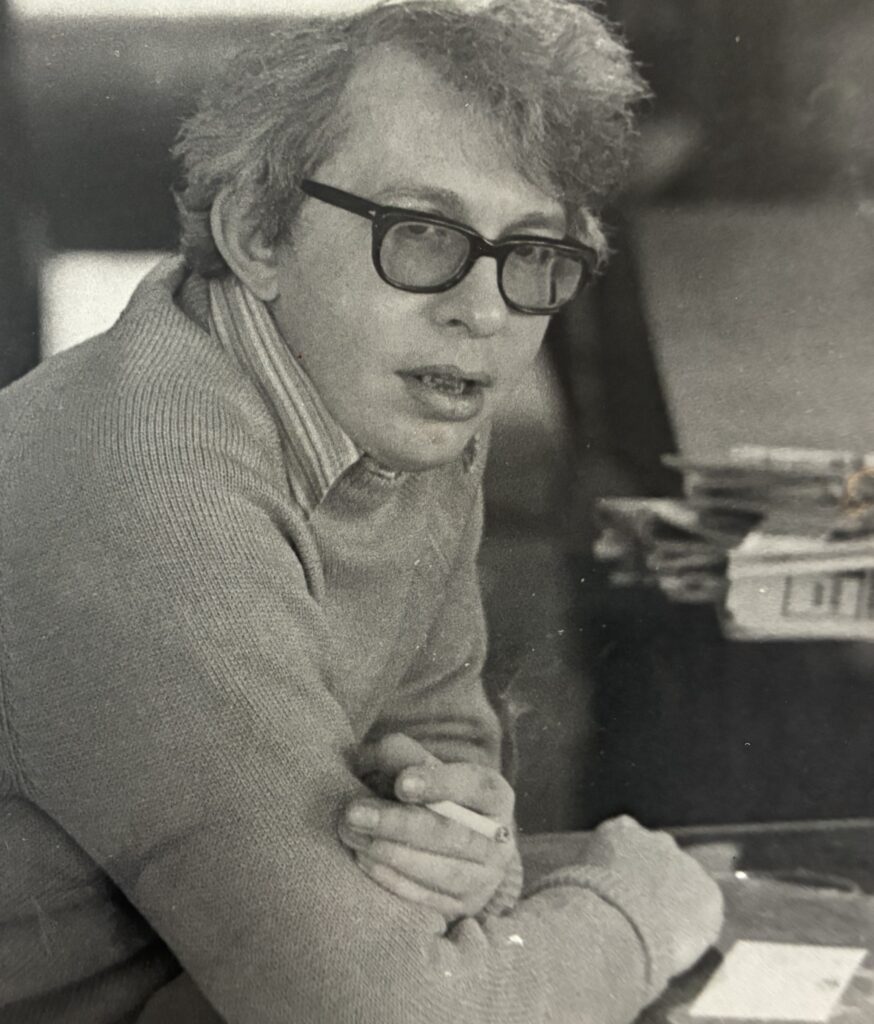
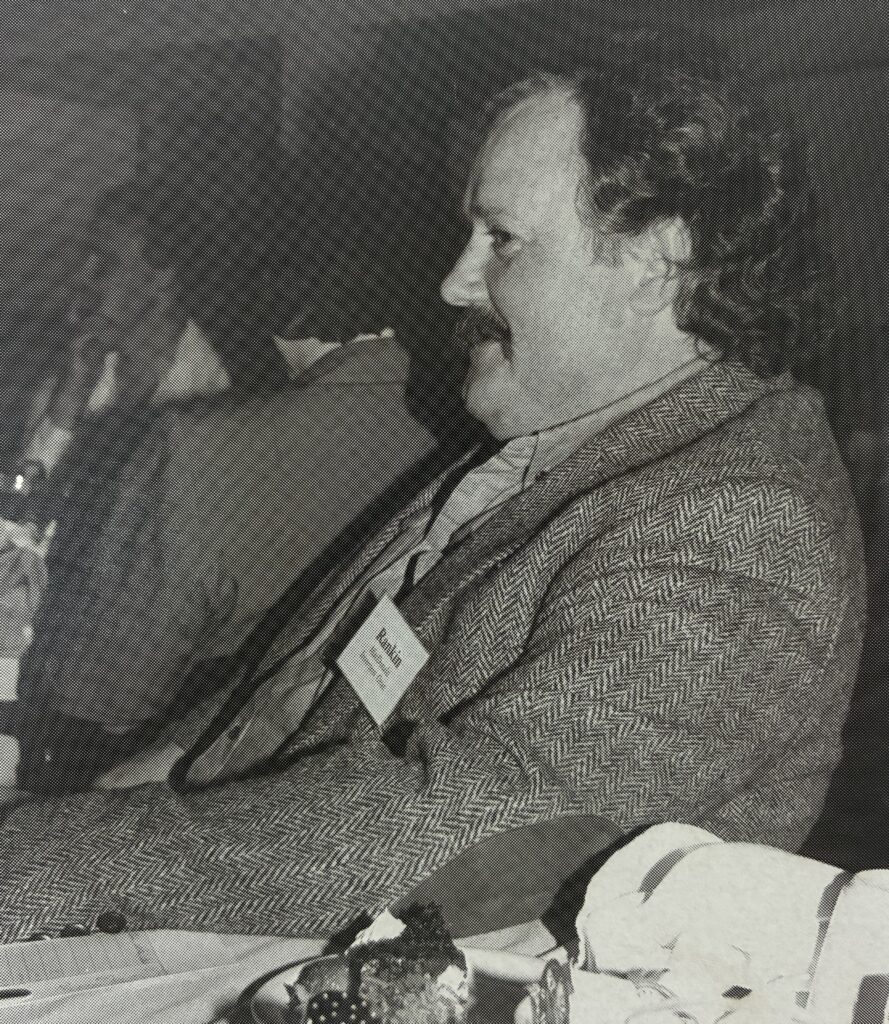
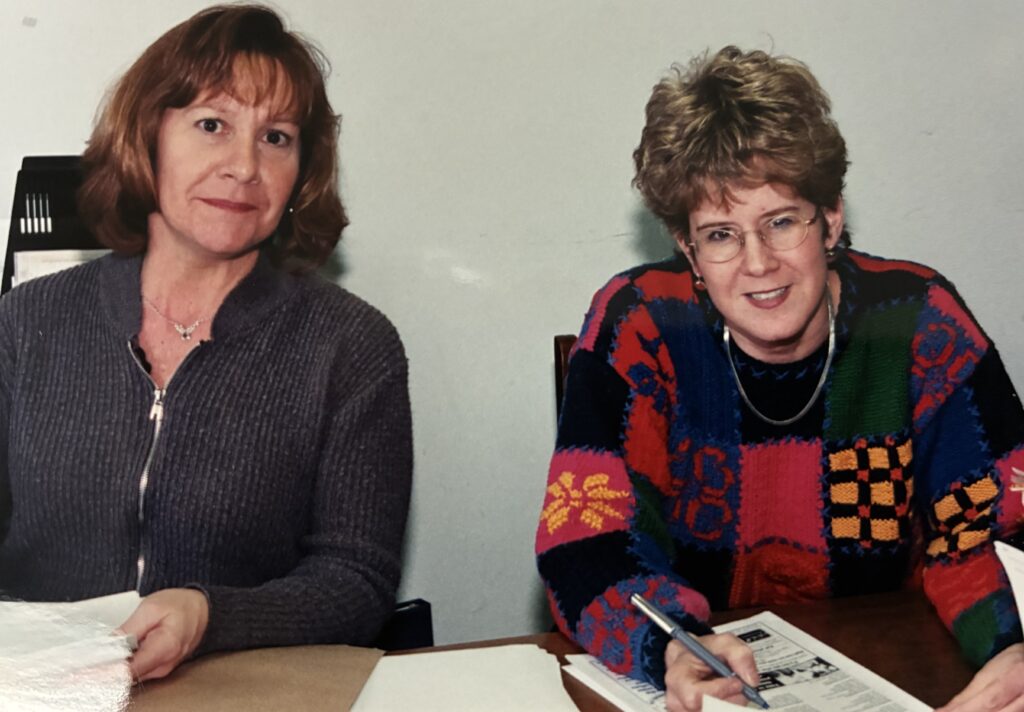
(Top left photo) Inverness native Lawrence Ryan was one of the founders of The Oran in 1976. (Top middle photo) Fr. Bob Neville, who served as priest at Stella Maris Parish in Inverness at the time, was also a driving force behind the newspaper’s creation. (Top right photo) Rankin MacDonald is shown attending an ACNA conference. (Bottom photo) Publisher Eleanor Macdonald, left, is shown with sales manager Inez Forbes, who passed away last year. Eleanor says Forbes contributed greatly to The Oran’s success over the years. (Photos: contributed)
“He said the only reason The Oran is succeeding is because not one of you had a day’s experience in newspapers when you started,” Frank laughed. “You didn’t know what you were doing.”
“[Cadogan] said no one would go into Inverness with no chain store, no shopping mall and no newspaper. You guys are doing it with video store and bingo ads.”
Frank says he never envisioned a 50th anniversary in those early days either.
“In my mind, it was something we were going to do until a real job came along,” he says, adding that the newspaper’s “karma” was its secret sauce, with the right person always coming along at the right time.
One of those people was sports editor Bill Dunphy, who is in his 36th year with the paper. Eleanor says Bill brought with him something that was unique to The Oran and that was actual journalism training.
Rankin says the sports section is very important to the newspaper because it draws in young readers, who will continue to read the paper as they get older.
But he says the key to the paper’s success is the decision he and Frank made early on to never say no to a story.
He says he’ll probably retire sometime in the next couple of years, but he’s confident the business will be in good hands as his daughters, reporter April MacDonald and circulation manager Kelly MacGillivray, will be taking over.
Frank, meanwhile, retired in 2008 to concentrate on his creative writing. With four novels and a children’s novella to his credit, he recently celebrated the 20th anniversary of his debut, A Forest for Calum.
He says the most important story The Oran covered over the years was the Nova Scotia government’s plan to amalgamate schools in the province, and the exploits of the various Save Our Schools organizations throughout the county who successfully fought amalgamation for more than a decade after the remainder of the province had succumbed to the move.
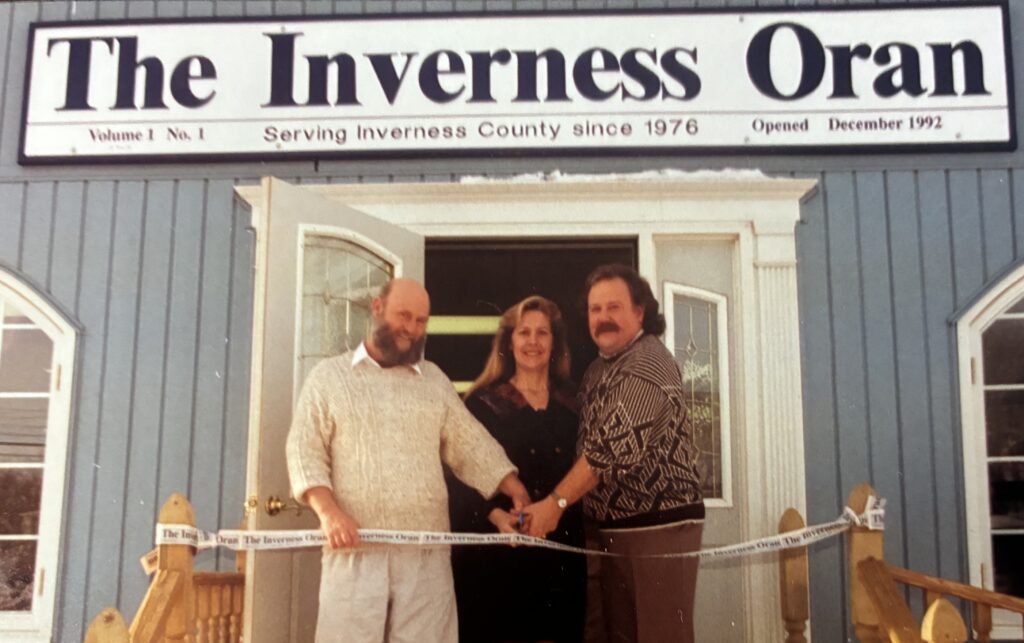
Macdonald, Eleanor Macdonald and Rankin MacDonald. (Photo: contributed)
“Those people who were organizing Save Our Schools were trying to save their communities,” Frank says. “And when the hammer finally fell and it became an amalgamated system, in every community the Save Our Schools movement became the core of a community economic development association. There were some excellent organizations trying to find economic ways to bring work and keep people in the community.”
He says it was a musical family from Mabou that provided him with most satisfying period in his life as a reporter.
“The most thrilling thing that happened for me was that I became the entertainment editor just around the same time the Rankins announced they were going to form a family band and try it for one year,” he recalls. “That was 1988 I think, and from there what happened was incredible.”
“That whole period, I just loved every minute of covering it.”
Having authored about 2,500 columns over the past five decades, he says he’s not sure how much longer he’ll continue to contribute to the paper.
Equally noncommittal is Eleanor, though she says she’ll probably move to part-time in the next couple of years.
“The girls (Kelly and April) are adamant about keeping this newspaper going,” she says, noting that “it’s really hard to step away.”
“I’m very proud of it,” Eleanor adds. “It’s still one of my children. I had my three children, and when I had my first, I was off work two weeks and I was back to work, and I took Kelly with me, because I needed to be there.”
She says the many employees the paper has had over the years are the key to its longevity.
“The work teams that worked with us over the years, they were amazing,” she says. “We worked until the work was done. They believed in it as much as we did.”
She says The Oran not only tells the stories that are important to county residents but also provides a “connection to home” for the many subscribers who live in other parts of the world.
“It’s ingrained in us now. It’s part of this county.”