Celtic Music Interpretive Centre turns new page with facelift
June 25, 2026
A year after celebrating its 25th anniversary, the Celtic Music Interpretive Centre Society in Judique hopes a facelift undertaken at the centre in recent months will enhance visitors’ experience.
The society operated out of a room in the local community hall for five years, before the Celtic Music Interpretive Centre (CMIC) was opened in 2006. The renovations that occurred this past offseason are the first for the centre since it opened 20 years ago.
“We replaced the flooring pretty much throughout the whole centre,” says CMIC’s board chair Marina MacEachern, who has been a board member since 2018. “We restructured the office area so that there would be more room for the centre’s board to have meetings.
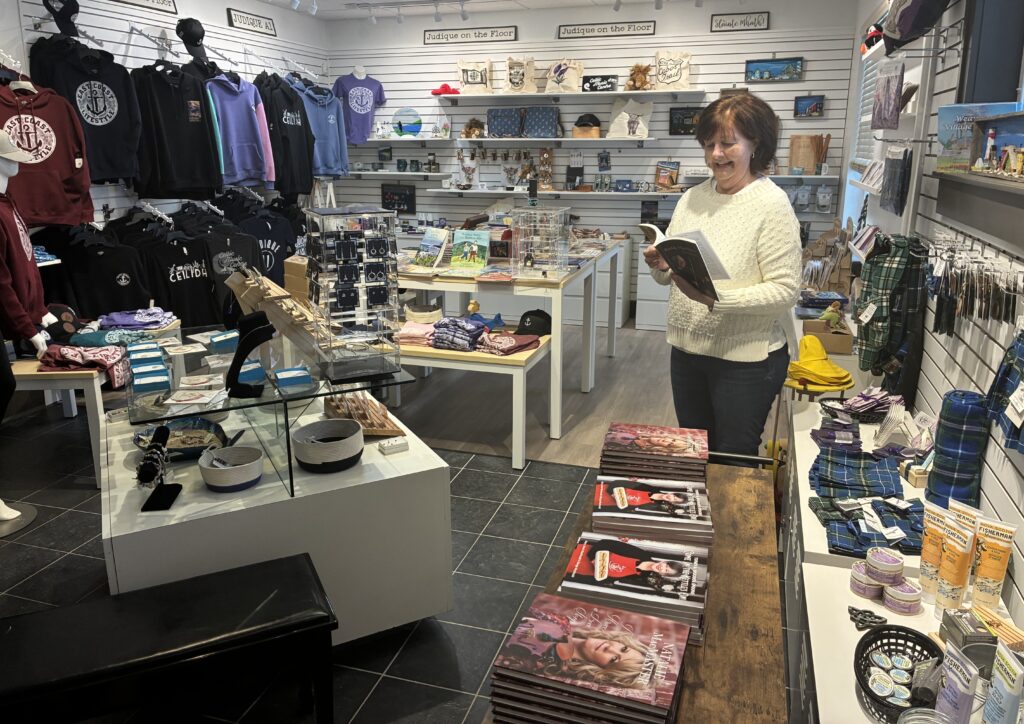
The work also doubled the size of the gift shop, and a new range and fire suppression system was installed in the centre’s kitchen.
Funding for the project was announced last year, with the CMIC receiving more than $1 million from the three levels of government, with about $700,000 from the province and $268,000 from the federal government through the Atlantic Canada Opportunities Agency (ACOA). The funding arrangements came with a condition that the CMIC raise $200,000 of its own money to replace the centre’s roof. To that end, the Municipality of Inverness County kicked in $75,000 over a two-year period to get that work done.
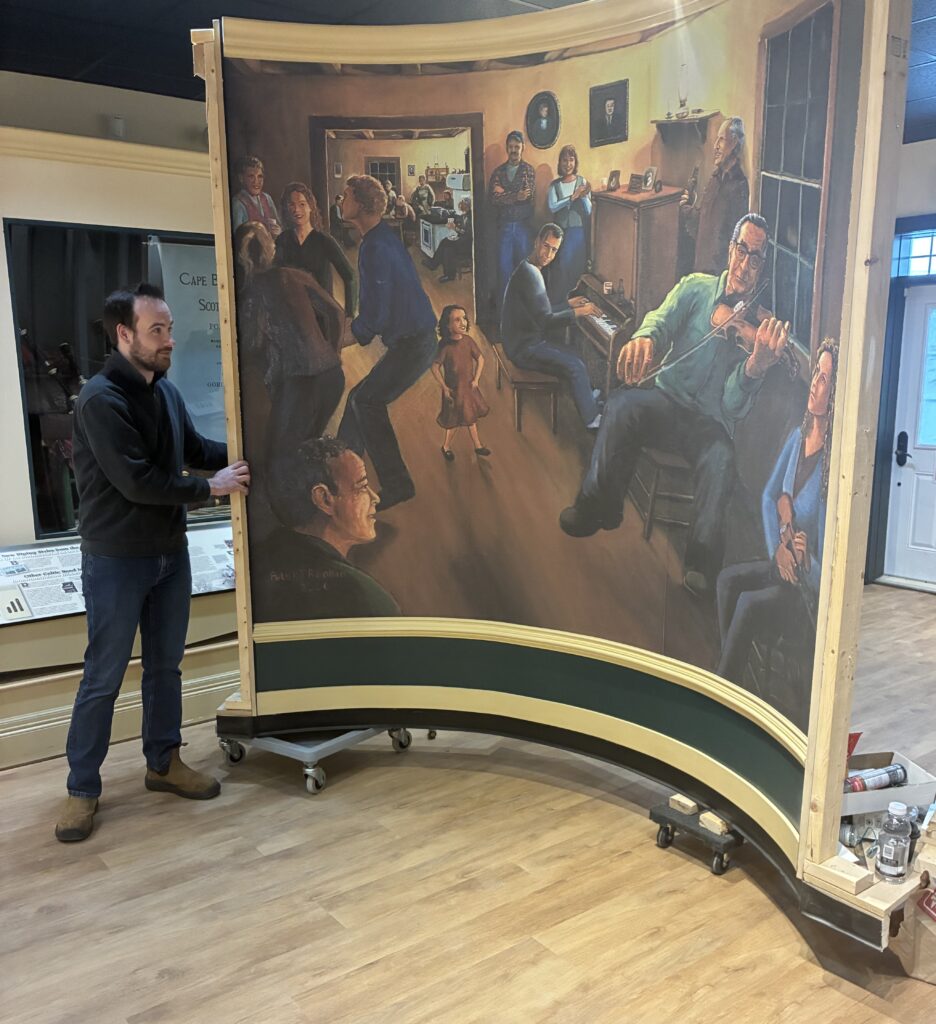
“One of the conditions of the government funding at the provincial level is that we had to increase seating at the centre, so we racked our brains trying to figure out how to do this,” MacEachern recalls. “One of the options was to find a way to use the exhibit room as an overflow area. So, we’re hoping that, should we have an event on where we need extra seating, we could use the exhibit room by removing a wall.”
“We can open it up, then you’re pretty much part of what’s going on, but it provides a quieter aesthetic, as you’re not going to be hearing the music as loudly.”
MacEachern points to another project that will open up even more seating, and that’s adding a room to the front of the centre that could be used from spring to fall.
“We have big double doors in the dining room, so the room would attach there, and give us about 40 more seats. It would be kind of like a sunroom in a sense in that it would be enclosed.”
The centre’s board is still deciding whether they could add heating, which would allow them to use the new room year-round.
She says there’s work that would follow from that addition, including landscaping and some patio seating outside the addition along the east side of the centre.
MacEachern says the work is helping the board realize the original goals of the centre.
“When the centre was built, I think it was an overriding desire of the people that were behind that to provide the protection of the history and culture and music of the area,” she says, adding that there are plans in place to eventually digitize the musical and cultural archives that are housed at the centre.
“It modernizes the building for sure, and I think it gives new life to the building and some impetus to what we do. I think the movers and shakers who were behind the centre originally would be pretty proud of what it has become.”
CMIC is also helping to keep the Celtic music and culture alive with their year-round Sunday ceilidhs which were interrupted by the renovations.
“We try to provide the stage and the performance area to any fiddlers we know and give them the opportunity to entertain there and to give them some exposure,” MacEachern says, adding that workshops held as part of the Fèis Cape Breton Youth Program also help to develop new performers.
The program offers intermediate and advanced workshops to build repertoire and skill in fiddle, guitar, piano, pipes, and accordion, and it includes the Buddy MacMaster School of Fiddle, which is held in conjunction with Celtic Colours each October and the Betty Lou Beaton School of Piano which runs during KitchenFest! which this year is scheduled for June 26 to July 4.
MacEachern says that with all the improvements that are being done, it’s the exhibit room that’s the centre’s “ace in the hole.”
“We’re looking to be able to offer more programming by having that room rearranged in such a way that we have more space,” she says. “We’re looking to have more exhibits that will bring people back—not just a one-time visit but bring them back to experience it. So, there are all kinds of possibilities around programming that can help us.”
During the summer months, CMIC depends heavily on tourist traffic, especially for its lunchtime ceilidhs (Monday – Friday 11:30 a.m. to 2:00 p.m.).
“I can’t help but be optimistic,” MacEachern adds, “There is an increased interest in Celtic culture and music, and we’re looking to capitalize on that.”