Asparagus for beginners
June 25, 2026
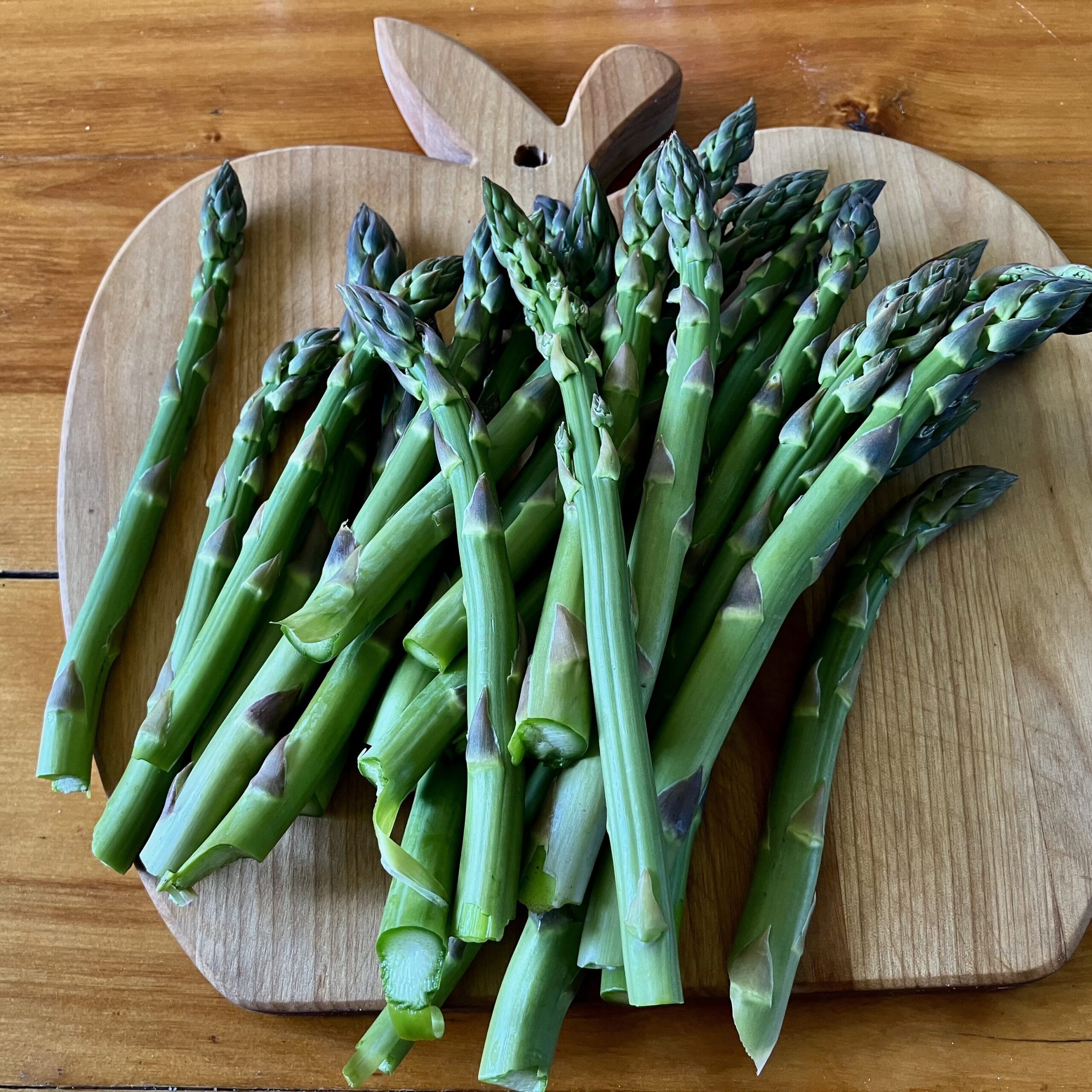
When I get talking gardening with someone who is starting out on a property, it is not long before I ask them if they have planted their asparagus patch yet. It sits with raspberries and carrots as my three most loved crops. It is one of those harvests that is unbelievably tastier and sweeter straight from the garden.
Asparagus plants are typically started with roots, called crowns, sold in the spring. The crowns are laid in an eight-to-12-inch-deep trench, “head to toe,” so that the growing buds are a foot apart. They are then covered with two or three inches of soil and compost. As the shoots come up, soil is gradually added, to bring the soil up to level.
Compost in the trench provides a well-rounded meal for getting the roots established. Later, modest amounts of nitrogen-rich manure encourage growth of the edible spears. The spears then leaf out to form elegant feathery fronds.
In the first year, no spears are harvested, and in the second year, “they” say not to harvest, but you might just have to pick a few (because you have to try them), and in the third year, you can harvest over a window of two weeks. In the years after, you can pick for about six weeks after they first appear in mid-May.
The reason for halting the harvest in early summer is to allow the fronds to develop, and take in energy from the sun. Spring harvesting has prevented the plant from recovering all the energy spent pushing up those fronds, so what is gained through the summer is stored in the roots, refuelling for next year’s crop.
Over the harvest window, you’ll have to visit the patch every two days or so, since the spears grow quickly. Harvest the spears that are the width of a pencil or thicker, at ground level, when they are about eight inches tall. My crop reluctantly provided a few spears per year, and I hesitated to pick from the struggling plants, but I have since learned that once established, harvesting actually encourages more production. A good patch will give you more than you can keep up with, so you’ll have some to share over their 15 to 30-year lifespan.
The plants can be placed in a garden row, or in sunny flower beds, since the mature plants are a lovely mass of fine foliage, which you may want to stake up. They make a yellow display in the fall, and should be cut down after they have fully faded to brown.
A big layer of compost or rich mulch applied in the spring will keep the weeds down, while the well-fed asparagus spears just poke right through. Like other perennial crops that aren’t dug up annually, I plant them away from the edge of the garden, to prevent persistent weed roots from creeping in and establishing themselves.
Asparagus wants well drained, and slightly acidic to neutral soil, so bone meal and lime are welcome. I have started another crop at our community garden, and I see how improved the growth is in soil with good texture. Now, in its fifth year, everything that comes up can be harvested during that six weeks of harvest.
And what to do with the harvest? Asparagus goes well in salads and can be lightly fried, barbecued, roasted, or added to stir-fries, but my go-to is a few spears steamed, served on toast, with a sprinkle of grated cheddar, which melts on contact.
Fun fact: Asparagus plants are either male or female. Both are fine in your garden. You’ll know female plants because they produce berries. The females also produce fewer, and larger spears, while males produce more, but smaller ones. Some varieties are sold only as male plants.
Happy Gardening!
Caroline Cameron lives in Strathlorne, and is the Food Security Coordinator at Mill Road Social Enterprises. Please submit any gardening tips, questions, and news to strathlorne@gmail.com. Visit Facebook at Mill Road Grows.