Early spring greetings: Many small joys
April 21, 2026
April gardening can still be a bit drab, before the flush of greenery and blossoms. But it is a good time to do a little clean-up before there’s a lot of tender new growth to damage.
We are encouraged to leave the debris in the garden so that we don’t disturb the dormant friendly insects. I neaten up a bit by cutting ragged garden stubble down gently, but then I leave the cut material there in the garden in neat piles that can be easily removed later in the spring. I like to get this done so that the gardens are neatened by Easter (depending on weather) and then get into more serious weeding and clearing by the May long weekend, when many of the insects have emerged.
It is tempting to think that “there’s enough woods around us to support the critters, so I don’t have to worry about them in my little garden.” But most critters are pretty specific to habitat, and if all gardeners take this attitude, very little cleared land in a locality will support the native insects who like clearings because of being disrupted by spring clean-up. Add to this a lack of native plant species in our yards that those insects can eat, and the possibility of spraying with various pesticides. All this together means that a lot of native insects aren’t going to thrive in our yards, and without those bugs, so go the birds who dine on them, and their lovely songs.
Here are five thoughts to consider this time of year:
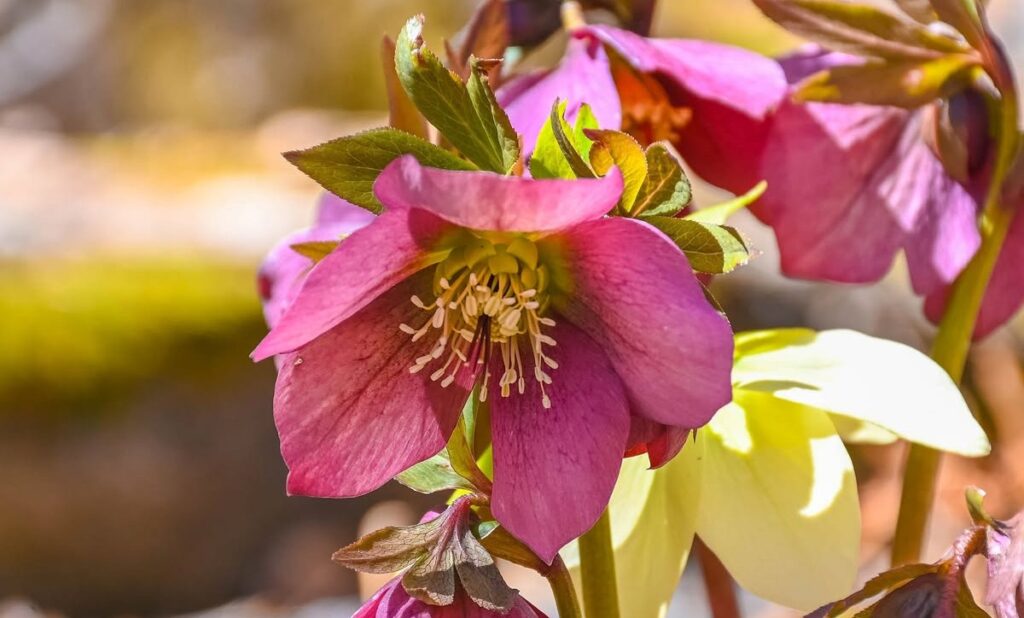
March and April are good times to cut a few branches of forsythia and place indoors in water for early blooming. Outside, Daphne blooms for me in late April, with or without the snow! My daphne is planted near my door, so I can enjoy its heavenly scent. I am looking forward to trying out Lenten rose (hellebore). It should be blooming here anytime soon.
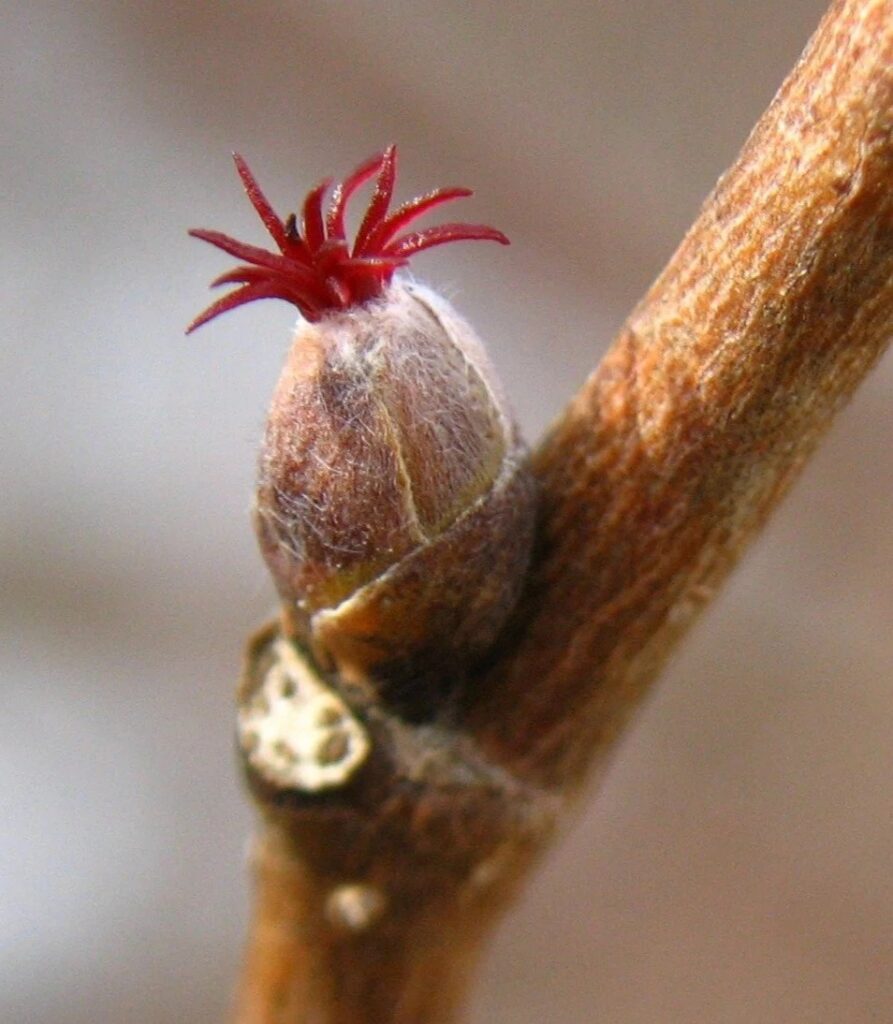
The appearance of pussy willows is the real assurance of the coming spring. The fluffy “pussies” are the willow’s flowers, which will show some red and then turn yellow with pollen, if left to grow. But they are not our earliest flowers. The humble little native beaked hazelnut blossom appears earlier still, in the forest understory, or in clearings and ditches, with no fanfare.
As plants are barely emerging in early spring, it is the best time to think about transplanting crowded or struggling plants, as soon as the soil thaws.
It is seedling-starting time! Most seedlings do fine with eight weeks of growth before going outside, but you’ve got nothing to lose by planting seedlings a bit later.
It seems that our final spring frost is coming far earlier these days, so it may be possible to put things out earlier than the typical mid-June window, but even if planted too early, seedlings can be protected from frost with blankets, as long as we remember to keep an eye on the forecast, or your precious plants may be lost.
You can start a few things as early as January, but you’ll need lots of space for the big pots they will need in order to grow well. Large seedlings cramped in small pots aren’t as vigorous as younger seedlings.
You can focus on starting things that really thrive on heat, like tomatoes, peppers and eggplant, so that they are already producing by the heat of the summer. Broccoli, and the rest of the cabbage family, can be started early because they really take advantage of the long season. Most other things do best seeded right into the garden, and you can extend their season by successive small plantings every two weeks.
If the grass has not yet started growing, you can open a new garden bed the easy way. You can simply cover dormant turf with a thick layer of materials that will break down into soil, leaving it grass-free by planting time, although a few dandelions and other perennial weeds may persist.
The conventional practice of turning sod and tilling is now giving way to this “no-till” approach in agriculture. If a gardener is able to control weeds with hoeing and mulching, there really isn’t a need for tilling, although more vigilance is needed around pest control. The freshly tilled brown plot is a beautiful sight but can be a lot of unnecessary work!
For those interested in connecting with other gardeners, find your local garden club, and also consider checking out the annual gathering of the Nova Scotia Association of Garden Clubs. This year, it will be held June 5-7, 2026 in Baddeck, and its theme is “Culture – Rhythm – Roots.” You’ll find interesting presentations from across the province, a great marketplace of unusual products, and lots of good gardening company. Visit their website, nsagc.com or find them on Facebook.
Happy Gardening!
Caroline Cameron lives in Strathlorne, has a small gardening business, and is the Food Security Coordinator at Mill Road Social Enterprises. Please submit any gardening tips, questions, and news to strathlorne@gmail.com. Visit Facebook at Nature/Nurture Gardening & Hiking.