Marble Mountain celebrates past with an eye to the future
December 22, 2025

When you drive through Marble Mountain, there’s no shortage of reminders of its heyday, when this community of about 100 full-time residents was home to nearly 2,000 people.
Whether it’s the very visible remains of the marble and limestone quarries, or St. Joseph’s Catholic Church, built in 1905, or the now closed MacLachlan and Sanders general store, which still stands as a testament to the glory years, it doesn’t take much imagination to bring that history to life.
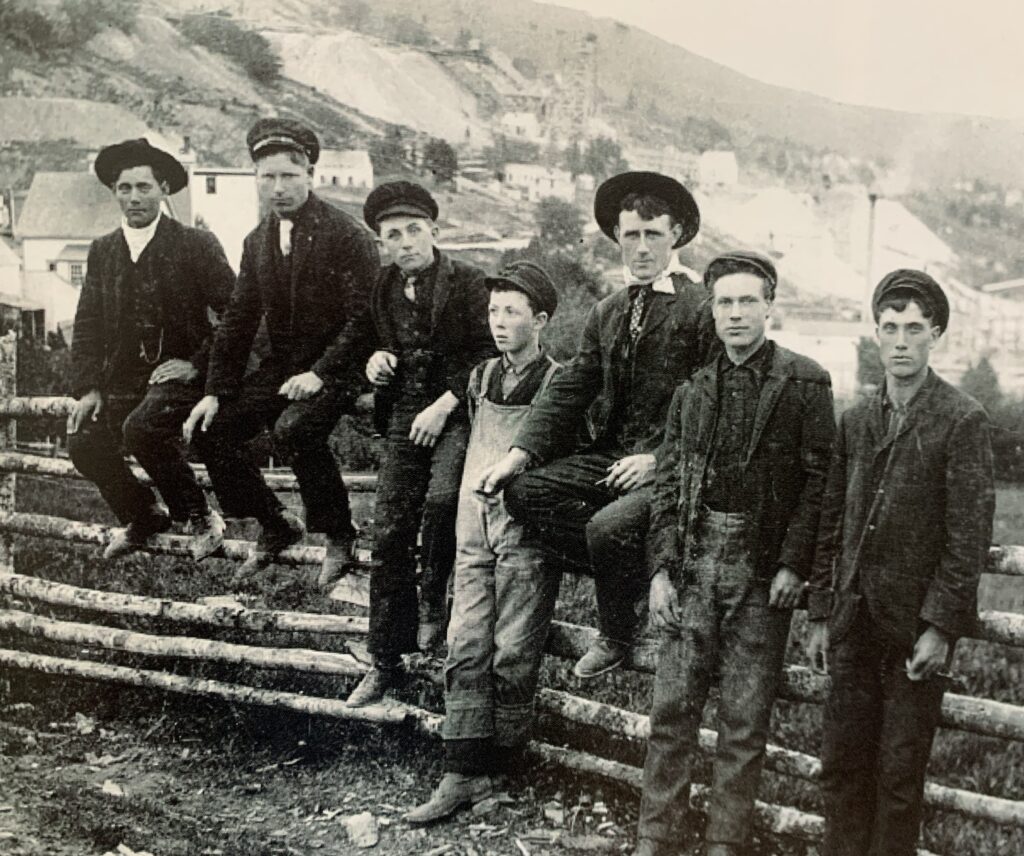
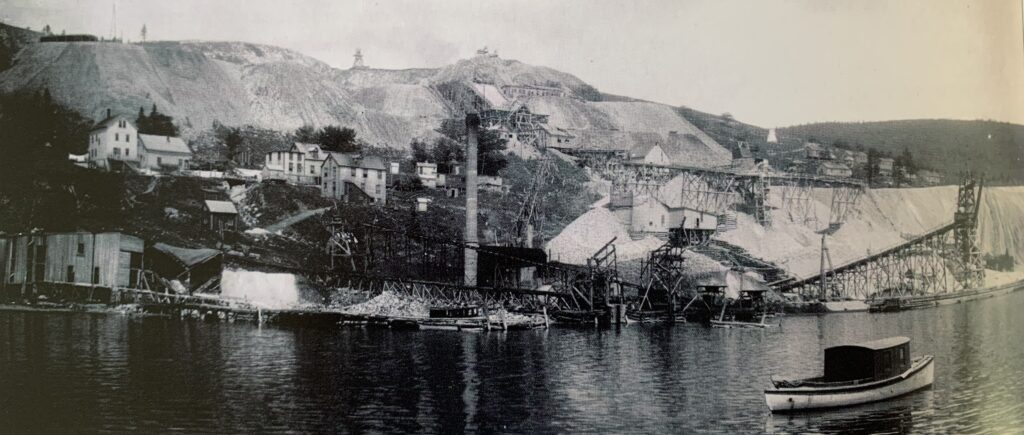
It’s that history that serves as a focal point for efforts currently underway to bring new life to this area, says Bill Legge, vice-chair of the North Mountain Cultural and Recreation Association (NMCRA), which serves a four-kilometre stretch along the Bras d’Or Lakes encompassing the communities of Marble Mountain, Malagawatch and Big Harbour Island.
“We have the history as the background and for many years it just sat there, and what we’re trying to do is use it as a backdrop to help us in our current activities,” Legge explains.
A key part of that effort was the creation of the association’s website earlier this year (marblemountaincommunity.ca), which marries the past with efforts to engage both full-time and seasonal residents of this area.
The area served by the association has no more than 100 full-time residents, but in the summertime that number swells upwards of 400. Legge is one of those seasonal residents and he says he’s seen encouraging trends.
“In today’s world, nobody builds a cottage anymore,” he says. “Costs are such that it doesn’t make sense, so people are building full-time residences and choosing when to come here instead of letting the season determine it.”
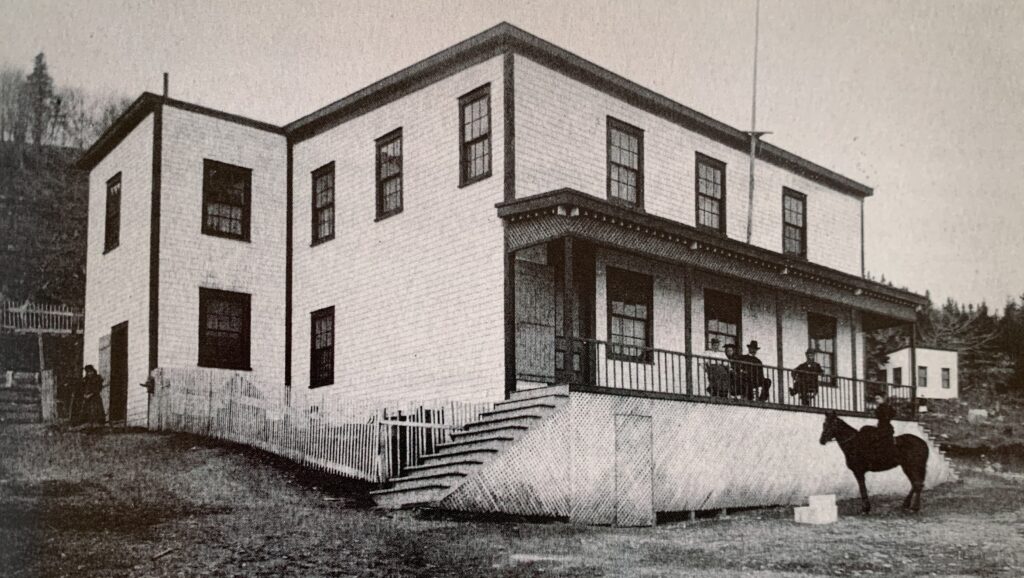
One of the key assets in the effort to engage full and part-time residents alike is the community hall, which was built in 1907 as an Oddfellow’s Hall. Renovated over the past 15 years, the hall features a community library with internet access, tables and regular programming such as games nights and special events on the ground floor. The second floor showcases historical artifacts dating back to the early 1900s, offering a glimpse into the area’s past.
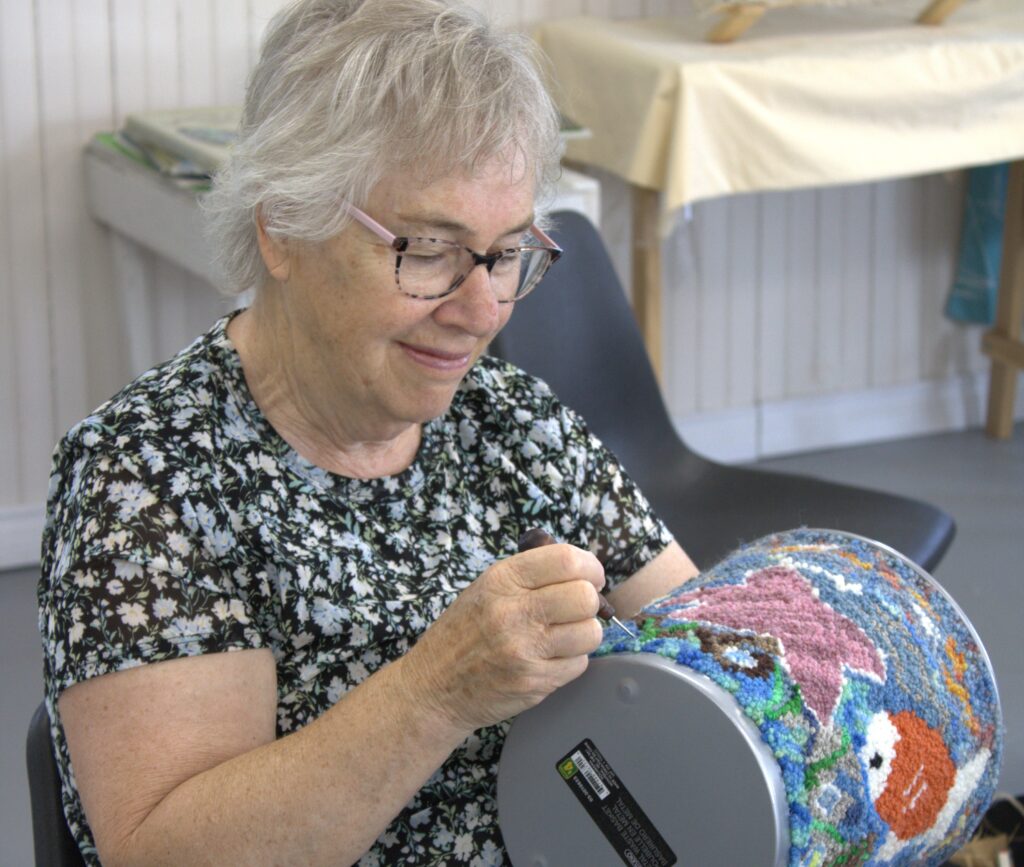
The hall was the site in October of a special event to celebrate the area’s heritage. “Memories on the Mountain” featured a harvest table as well as heritage displays and demonstrations. Guests also shared memories of the area through stories and poems.
Legge says that event is a big part of the NMCRA’s efforts.
“We had enough going on that day to fill two days, and next year we should split it up and make it a two-day event,” he says. “There was so much going on and so many people that it made it difficult to capture and see everything.”
The story of Marble Mountain began in 1868 when Nicholas Brown from Prince Edward Island stumbled upon a large deposit of marble and quickly claimed mineral rights for the area and began quarrying marble and limestone. He named the area Marble Mountain to promote his business and was responsible for establishing the community’s first post office in 1871.

Brown died in 1879 and six years later the site was bought in a sheriff’s sale by Bras d’Or Lime and Marble Company, which extracted a grey marble from the lower quarry to produce white lime for the construction and agricultural industries, while large blocks of white marble from the upper quarry were cut into slabs for use as building and monument stone.
Industrial activity in the area reached its peak after the Dominion Steel Company (DOSCO) purchased Marble Mountain in 1902. For the next 20 years, DOSCO produced crushed limestone which was used as flux in the company’s steel plant. (Flux is used in the smelting process to remove impurities.)
DOSCO stopped operations on Marble Mountain when it developed a new source of limestone in Newfoundland, but for those two decades the village flourished, as the company employed nearly 1,000 people. During that time, the village boasted two churches, seven stores and a branch of the Royal Bank of Canada. It even had its own power generating station to provide electricity for the quarry, which meant that residents of the community had electric lights while the remainder of rural Cape Breton were still using candles and oil lamps.
The quarry sat idle for 40 years following DOSCO’s departure, until it was purchased by Marble Mountain Quarries Limited in 1961. Company president Lester E. Hubley, who was also president of Nova Scotia Sand and Gravel, bought the operation to quarry and market marble and crushed rock, which he did for more than 20 years.
Hubley also started the first sand and gravel barging operation in St. Margaret’s Bay and was a founding partner of Hubley Centre, the shopping area in Tantallon, Nova Scotia that bears his name.
Since Hubley abandoned the operation in the 1980s, there have been occasional tests and small-scale extractions, but no significant production, although it’s estimated there may still be about three million tons of marble at the site.